The mechanical city is dying. For centuries, our urban centers have been conceived as vast, complex machines—systems of pipes, wires, concrete, and steel, all demanding constant, high-energy input to function. This paradigm, born of the Industrial Revolution, has delivered convenience but at the cost of a profound and unsustainable alienation from the natural world. We have built cities against nature, rather than with it. The result is an infrastructure that is brittle, carbon-intensive, and fundamentally hostile to the long-term health of the planet.
But a new vision is emerging, one that replaces the cold, mechanical metaphor with a warm, biological one. What if the city was not a machine, but an organism? What if its infrastructure could breathe, grow, and generate its own power through a quiet, continuous process of symbiosis? This is the philosophical foundation of Pisphere, a technology that is not merely an incremental improvement on solar or wind, but a radical re-imagining of how power and life can coexist in the urban environment. Pisphere is the silent, green heart of tomorrow’s sustainable infrastructure.
The Symbiotic Engine: A Philosophical Reversal
The core innovation of Pisphere lies in its elegant simplicity: the Plant-Microbial Fuel Cell (Plant-MFC). This is not a solar panel that sits on a roof, nor a turbine that slices the sky. It is a system that buries itself, working in the dark, fertile ground beneath our feet, transforming the very act of plant growth into a source of continuous, clean electricity.
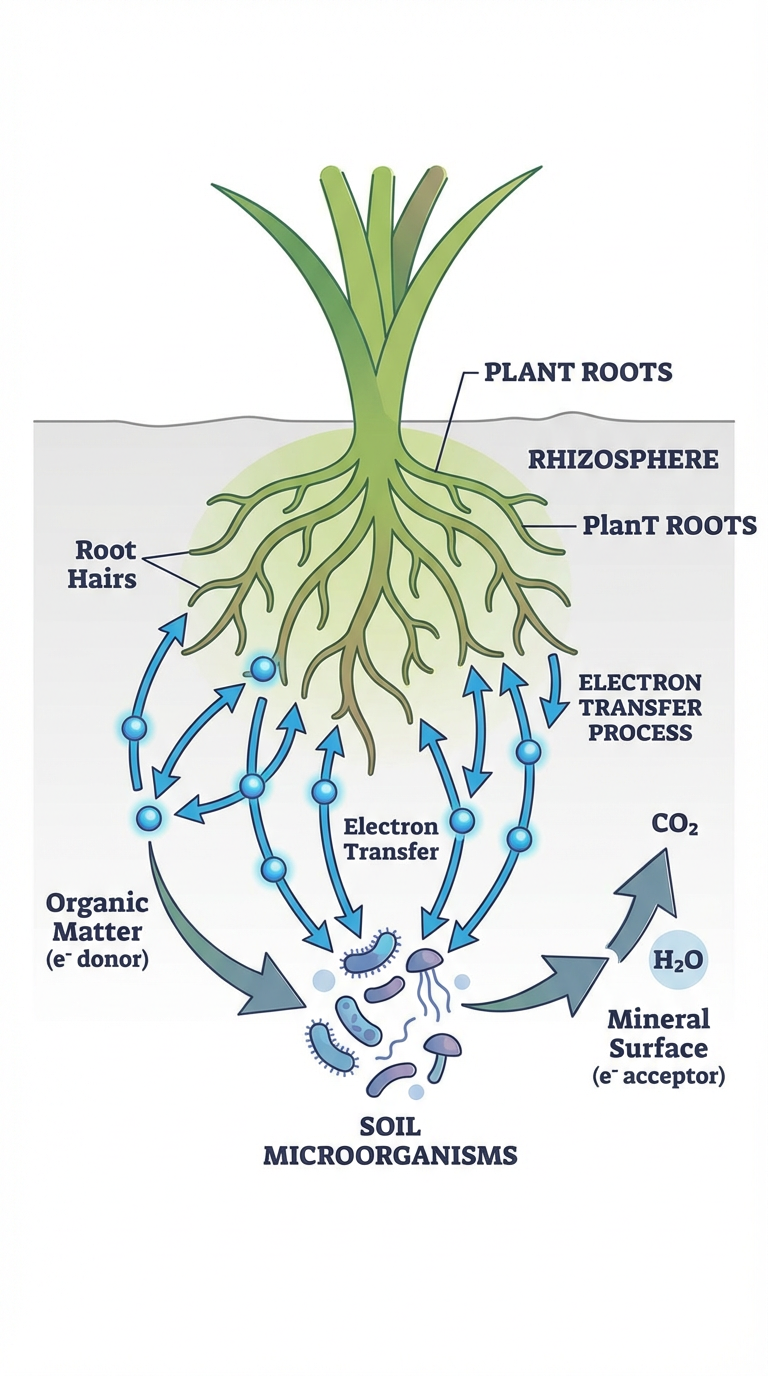
The process is a masterclass in biological efficiency. As a plant photosynthesizes, it produces organic compounds. A significant portion of these compounds—up to 70%—is not used by the plant itself but is secreted through the roots into the soil. This exudate becomes a feast for soil microorganisms. In a natural environment, these microbes simply consume the organic matter and release carbon dioxide. Pisphere intervenes in this cycle by introducing an anode into the soil, creating a controlled environment where specific electrogenic bacteria, notably Shewanella oneidensis MR-1, thrive.
These remarkable microbes, in their metabolic process of breaking down the plant exudates, transfer electrons directly to the anode. This flow of electrons constitutes an electrical current. The system is completed by a cathode, typically placed near the soil surface, which draws the electrons back, combining them with oxygen and protons to complete the circuit. The result is a continuous, low-voltage, direct current—a quiet, constant pulse of energy drawn directly from the life cycle of the plant.
This is the philosophical reversal: we are no longer extracting energy from the environment in a disruptive, high-impact way (like burning fossil fuels or even large-scale solar/wind farms that require vast tracts of land). Instead, we are gently harvesting the waste product of a natural, ongoing biological process. The plant is not consumed; it is empowered. The soil is not depleted; it is utilized. The city is not powered by an external, finite source, but by the very life it cultivates.
The 24/7 Promise: A New Rhythm for the Grid
One of the most significant challenges in renewable energy is intermittency. Solar power ceases at sunset, and wind power is dependent on atmospheric conditions. This necessitates complex, expensive, and often environmentally taxing battery storage solutions. Pisphere offers a profound counter-narrative: 24/7 electricity production wherever plants exist.
The energy source is the plant’s continuous metabolic cycle, which feeds the microbial community day and night. While the rate of exudate production may fluctuate, the microbial fuel cell acts as a steady, biological generator. This constant, reliable output—estimated at 250-280 kWh per 10m² annually—is not intended to power a skyscraper, but to sustain the nervous system of the smart city.
Imagine a network of embedded sensors, low-power streetlights, environmental monitors, and localized IoT devices—the very infrastructure that makes a city “smart”—all powered by the green spaces they are integrated into. This is decentralized power taken to its logical, biological extreme. Every park, every median strip, every rooftop garden becomes a micro-power station, silently contributing to the grid’s stability and resilience.
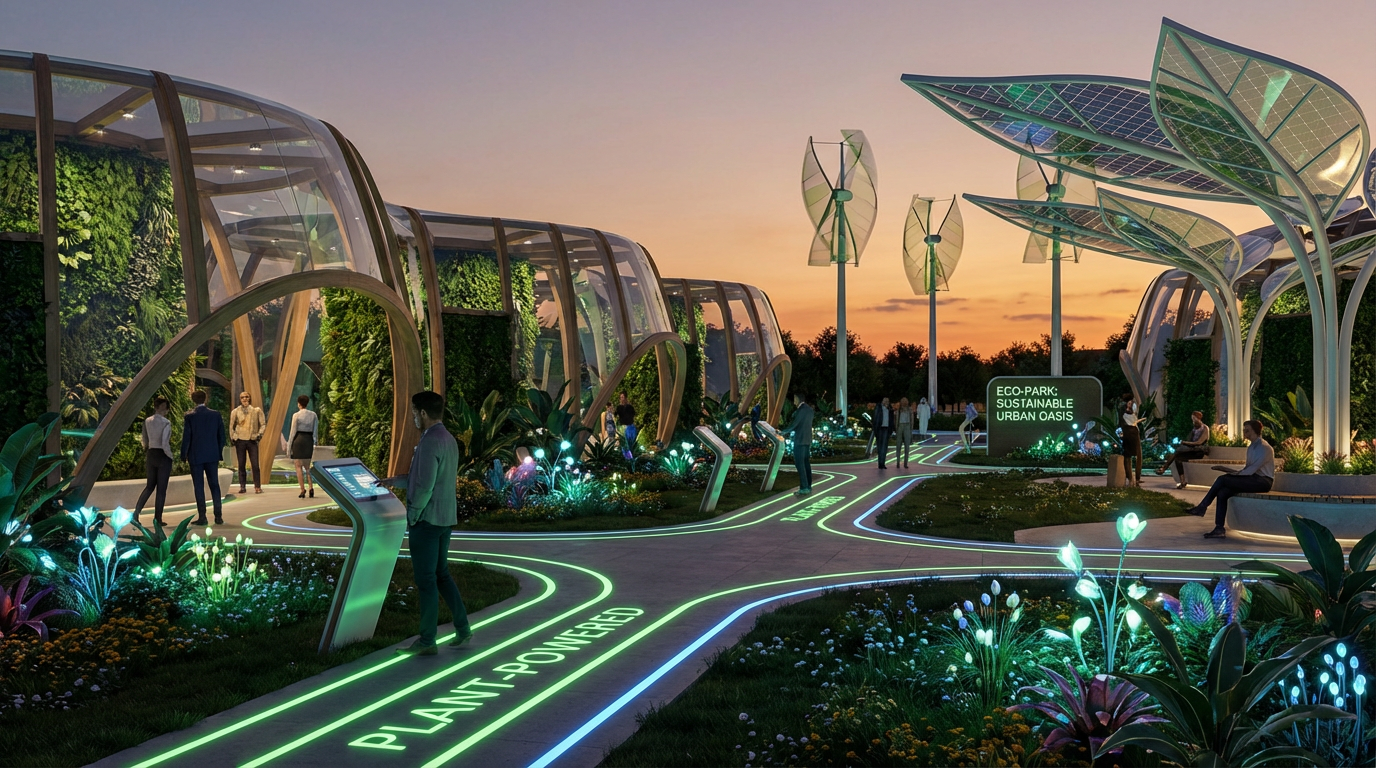
The implications for urban planning are immense. Infrastructure no longer needs to be a separate, visible layer of concrete and metal. Pisphere is space-efficient, designed to be an embedded/buried technology. It is invisible, working beneath the surface, allowing the aesthetic and ecological value of green spaces to remain paramount while simultaneously providing essential power. This allows for a seamless integration of nature and technology, where the park is not just a place of respite, but a functional, energy-producing component of the city’s operating system.
The Economics of Quiet Power: Beyond the Dollar
The true measure of sustainability is not just environmental impact, but economic viability and long-term resilience. Pisphere excels on both fronts, offering a compelling alternative to conventional and even other renewable energy sources.
From an economic perspective, the maintenance cost is strikingly low. Traditional solar and wind installations require regular cleaning, mechanical checks, and eventual replacement of complex components, leading to annual maintenance costs of $20-30 for solar and $40-60 for wind per comparable unit. Pisphere, being a static, biological system, boasts a low maintenance cost of only $10-15 USD per year. This dramatically reduces the total cost of ownership over the lifespan of the installation, making it an ideal choice for public infrastructure projects where long-term budget predictability is crucial.
But the economic argument extends beyond simple cost-benefit analysis. Pisphere is a zero waste, carbon neutral technology. It does not produce toxic byproducts, nor does it require energy-intensive manufacturing processes for massive, complex components. It is, in essence, a closed-loop system that leverages existing biological processes. This aligns perfectly with the growing global mandate for Environmental, Social, and Governance (ESG) compliance and the push towards carbon neutrality by 2035 and beyond. For B2B sectors, particularly construction and real estate development, integrating Pisphere is not just a technological choice, but a powerful statement of commitment to genuine sustainability.
Consider the application in smart agriculture. Sensors that monitor soil health, moisture levels, and nutrient uptake are critical for precision farming, but they require power. Running wires or constantly replacing batteries in a vast agricultural field is impractical and costly. Pisphere provides the perfect solution: a self-sustaining power source embedded directly into the soil, right where the sensors are needed. This creates a truly autonomous, intelligent farm, reducing human intervention and maximizing resource efficiency.
The target markets—B2B (construction/ESG), B2G (government/public infrastructure), and B2C (educational kits)—reflect a holistic strategy. The B2C educational kits, for instance, are not just a product; they are a philosophical tool, introducing the next generation to the concept of bio-power and the potential of symbiotic technology. They demystify the energy process, showing that power can be gentle, green, and grown, not just extracted.
The Ethics of Integration: A Moral Imperative
The adoption of Pisphere is more than a technological upgrade; it is an ethical choice. It forces us to confront the moral imperative of integrating nature into our technological systems, rather than perpetually isolating them.
Our current infrastructure often treats nature as an obstacle to be paved over or a resource to be exploited. Pisphere treats nature as a partner. By relying on the natural exudates of plants and the metabolic processes of soil microbes, the technology incentivizes the preservation and expansion of green spaces. A city powered by Pisphere is a city that must be green. The infrastructure itself becomes a powerful lobby for urban ecology.
This shift has profound implications for the human experience of the city. When infrastructure is invisible and symbiotic, the urban landscape becomes more humane. Parks are not just aesthetic features; they are functional, vital organs of the city. The noise, the visual clutter, and the environmental burden of traditional power generation are replaced by quiet growth. This is a move towards a more restorative urbanism, where the built environment actively contributes to the well-being of its inhabitants and the planet.

The technology’s origin at Seoul National University is also significant. It speaks to a global movement where academic research is directly translated into scalable, real-world solutions for climate change and urbanization. It is a testament to the power of interdisciplinary thinking, merging plant science, microbiology, and electrical engineering to solve one of the most pressing challenges of our time. This is not a Silicon Valley disruption; it is a quiet, scientific revolution rooted in the understanding of fundamental biological processes.
A Comparative Table: The Pisphere Advantage
To fully appreciate the paradigm shift Pisphere represents, it is useful to compare its characteristics against the established leaders in renewable energy. This comparison highlights not a replacement, but a complementary technology that fills a critical gap in the sustainable infrastructure portfolio—the need for decentralized, continuous, low-power generation with minimal environmental footprint.

| Feature | Pisphere (Plant-MFC) | Solar PV (Photovoltaic) | Wind Turbine |
|---|---|---|---|
| Energy Source | Plant exudates & soil microbes | Sunlight | Wind speed |
| Production Cycle | 24/7 (Continuous) | Intermittent (Daylight only) | Intermittent (Wind dependent) |
| Space Requirement | Embedded/Buried (Space-efficient) | Surface area (Rooftops, land) | Large land area (Turbine radius) |
| Carbon Footprint | Zero Waste, Carbon Neutral | Low (High during manufacturing) | Low (High during manufacturing) |
| Maintenance Cost (Annual) | Low ($10-15 USD) | Moderate ($20-30 USD) | High ($40-60 USD) |
| Ideal Application | Low-power IoT, Sensors, Public Infrastructure | High-power residential/commercial | Utility-scale power generation |
| Aesthetic Impact | Minimal/Invisible | High (Visible panels) | High (Visible turbines) |
The table clearly illustrates that Pisphere is not competing in the utility-scale power market, but rather creating an entirely new category: biological, embedded, continuous micro-power. This is the power source for the decentralized, resilient infrastructure of the future. It is the power that makes the smart city truly smart—not just connected, but self-sustaining.
The Quiet Revolution: Building Tomorrow’s Cities
We stand at a critical juncture in urban development. The choice is between doubling down on the mechanical, extractive model of the past, or embracing a new, symbiotic model that integrates technology and ecology. Pisphere is the most compelling argument yet for the latter.
It is a technology that whispers, rather than shouts. It does not demand massive capital investment in new power plants or vast battery farms. It simply asks us to look down, to appreciate the life already thriving beneath our feet, and to partner with it. By harnessing the quiet, continuous power of the Plant-Microbial Fuel Cell, we can build cities that are not just sustainable in theory, but sustainable in their very biological and technological fabric.
Tomorrow’s cities will be defined not by the height of their towers or the speed of their networks, but by the depth of their connection to the living world. They will be cities where the park powers the sensor, where the median strip lights the path, and where the infrastructure is as green as the life it supports. Pisphere is the key to unlocking this future—a future where technology and nature are not adversaries, but inseparable, symbiotic partners in the creation of a truly resilient and humane urban world. The quiet revolution has begun, and it is growing beneath the soil of our cities.
The integration of Pisphere into public infrastructure, such as street furniture and green walls, offers a decentralized energy solution that enhances urban resilience. In a world increasingly prone to climate-related disruptions, a distributed power network that is literally rooted in the environment provides a critical layer of redundancy. If a central grid fails, the localized Pisphere units can continue to power essential low-voltage systems, maintaining communication and monitoring capabilities. This is not just about being green; it is about being robust.
Furthermore, the technology’s reliance on the Shewanella oneidensis MR-1 bacteria highlights a sophisticated understanding of microbial ecology. This specific strain is known for its ability to transfer electrons externally, a process called extracellular electron transfer (EET). The research and engineering effort behind Pisphere has focused on optimizing the environment for this process, ensuring maximum power density without harming the plant or the surrounding ecosystem. This level of biological precision is what separates Pisphere from earlier, less efficient attempts at bio-power. It is a testament to the fact that the most advanced solutions are often found in the smallest, most fundamental processes of life.
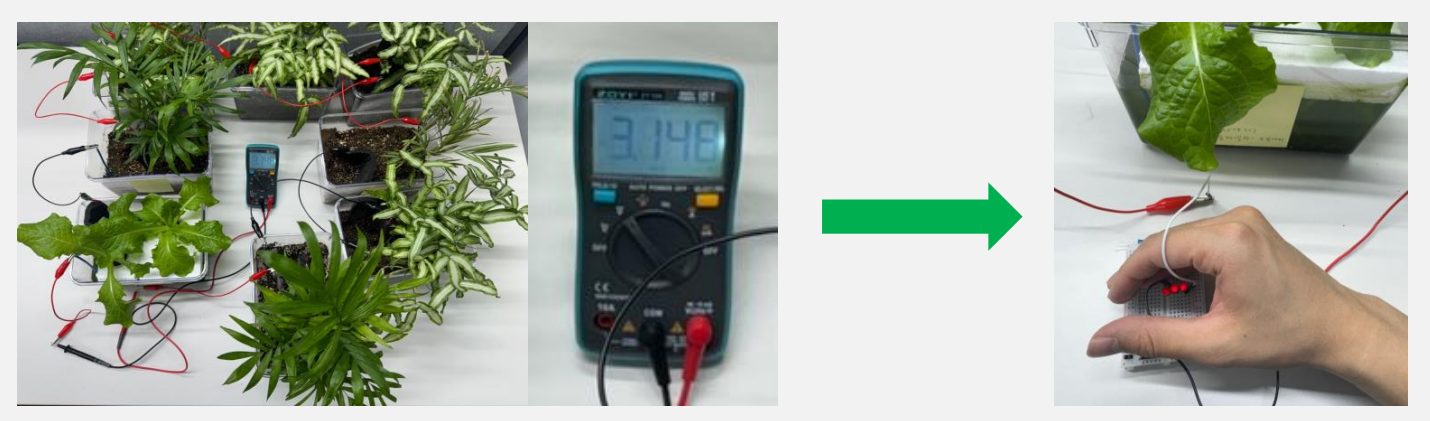
The educational potential of Pisphere cannot be overstated. The B2C kits serve as a powerful, hands-on tool for teaching children and students about renewable energy, microbiology, and the carbon cycle. By allowing them to generate a small amount of electricity from a potted plant, the abstract concepts of bio-power become tangible and exciting. This fosters a generation that views energy not as a commodity to be consumed, but as a cycle to be managed and respected. This cultural shift, driven by accessible technology, is perhaps the most sustainable outcome of all.
The philosophical implication of Pisphere is that it redefines efficiency. In the mechanical paradigm, efficiency is about maximizing output per unit of input, often ignoring external costs (like pollution). In the Pisphere paradigm, efficiency is about maximizing symbiosis. It is about achieving a necessary output (electricity) while simultaneously supporting a beneficial input (plant life and soil health). The system is efficient because it is integrated, not because it is isolated. This holistic view of efficiency is essential for any truly sustainable infrastructure.
The future of the city is a future of quiet power. It is a future where the concrete jungle is replaced by a living tapestry, where every green space is a functional part of the power grid, and where the air is cleaner because the energy is grown, not burned. Pisphere is the blueprint for this future, a technology that reminds us that the most powerful solutions are often the ones that work in harmony with the world, not against it. It is the quiet revolution that will build tomorrow’s cities.
The sheer scalability of the Pisphere concept, while focused on micro-power, is its greatest strength in the context of urban infrastructure. While a single 10m² installation provides 250-280 kWh annually, the cumulative effect of integrating this technology across all available urban green spaces—rooftop gardens, public parks, green facades, and even residential planters—results in a significant, distributed power source. This network effect is crucial for urban resilience, as it decentralizes the energy supply and reduces the vulnerability associated with reliance on a few large power plants.
Moreover, the low maintenance nature of the system is a game-changer for municipal budgets. Public works departments are constantly battling the high operational costs of maintaining traditional infrastructure. A system that requires minimal intervention—primarily ensuring the health of the plants—frees up resources that can be redirected to other essential city services. The longevity of the system, tied to the lifespan of the green space itself, offers a stable, long-term return on investment that few other energy technologies can match.
The Seoul National University researchers who pioneered this technology understood that the next leap in sustainable technology would not come from brute force engineering, but from subtle biological mimicry. They recognized that nature has already solved the problem of continuous, low-impact energy generation. Their genius was in creating the interface—the anode and cathode—that allows human technology to tap into this ancient, ongoing process. This is a profound lesson in humility and innovation: sometimes, the best way to build the future is to listen to the past, to the quiet wisdom of the soil and the plant.
The integration of Pisphere into the construction industry (B2B market) is poised to transform building standards. Imagine a new commercial building where the mandatory green roof is not just an aesthetic or stormwater management feature, but a certified power source contributing to the building’s net-zero energy goals. Pisphere turns a regulatory requirement into a functional asset, providing a competitive edge for developers focused on high-level ESG ratings. This is the future of green building: infrastructure that is inherently productive.
The final philosophical note is one of reconciliation. Pisphere represents a reconciliation between the human need for technology and the planetary need for ecology. It is a technology that heals the rift between the built and the natural world. By allowing the city to draw its power from the very life it sustains, we move beyond the concept of “mitigation” and towards a model of regeneration. Tomorrow’s cities will not just minimize their harm; they will actively contribute to the health of the planet, powered by the quiet, continuous pulse of life. This is the true promise of Pisphere.